A wheelchair lift that fails on a Tuesday morning route does not stay a maintenance problem for long. On a public transit system it becomes an ADA compliance question, and it may still be sitting on the record when federal auditors arrive for a triennial review. Inspectors rarely walk through the garage and simply glance at equipment. They ask for paper: service histories, inspection logs, securement checks, and training files that name people and dates.
Below is what auditors actually examine, how the requirements differ across transit, over-the-road, shuttle, and school bus operations, and how to build a routine that keeps a fleet audit ready all year instead of the week before a review.
Why Fleet ADA Compliance Is a Safety Issue First
The ADA is a civil-rights law that guarantees people with disabilities an equal opportunity to take part in society, and transportation is central to that participation. More than 61 million people in the United States have disabilities, and many of them depend on buses, shuttles, and paratransit for work, school, medical appointments, and family life.
Failing to comply with the ADA exposes a fleet to the same category of problems as a serious accident: lawsuits, fines, court appearances, and audits. That risk alone justifies attention. The stronger reason is safety. A lift that jams, a ramp that will not deploy, or a securement strap that lets go puts a passenger in danger and puts the operator in front of a regulator. Compliance work and safety work are the same work.
What FTA Auditors Examine During a Triennial Review
FTA auditors scrutinize lift maintenance records, ramp inspections, securement device checks, and complementary paratransit documentation at every triennial review. Those four areas map to the requirements in 49 CFR 37.163, and a complete audit checklist covers all of them. The format matters less than the consistency. Auditors are looking for evidence that accessibility equipment was maintained on a schedule and that someone was paying attention between breakdowns.
| Audit area | What the record should demonstrate |
|---|---|
| Lift maintenance records | A service history for each vehicle, not a repair history |
| Ramp inspections | Documented checks of ramp condition and function |
| Securement device checks | Evidence that straps, tie-downs, and restraints were inspected |
| Complementary paratransit documentation | Records supporting paratransit obligations under 49 CFR 37.163 |
Lift Maintenance Records
Wheelchair lift records should show maintenance, not just repair. Auditors want to see that lifts were inspected and serviced before they failed, with dates and vehicle identifiers that let them trace one bus from one review to the next. A file full of work orders created only after passenger complaints is a warning sign, even when the equipment itself is currently working.
Ramp Inspections
Ramps receive the same scrutiny as lifts. Inspectors look for documented inspection of ramp condition and function, including who checked the equipment and when. Missing ramp documentation is a common gap for fleets that treat ramps as passive hardware rather than as a system that needs testing, lubrication, and adjustment like any other moving component.
Securement Device Checks
Securement systems hold wheelchairs and mobility devices in place during normal operation and emergency maneuvers. Commercial shuttle fleets must secure professional securement systems to comply with federal passenger safety rules, and transit fleets operate under the same practical expectation. Straps, tie-downs, and restraints should be inspected on a documented cycle, with damaged components replaced rather than rotated back into service.
Complementary Paratransit Documentation
Public transit agencies that run fixed-route service also carry paratransit obligations. Auditors review complementary paratransit documentation as part of the same triennial review, which means records kept by a separate department still need to be complete and retrievable when the audit window opens. Gaps between departments become findings on paper.
The Finding That Appears Most Often
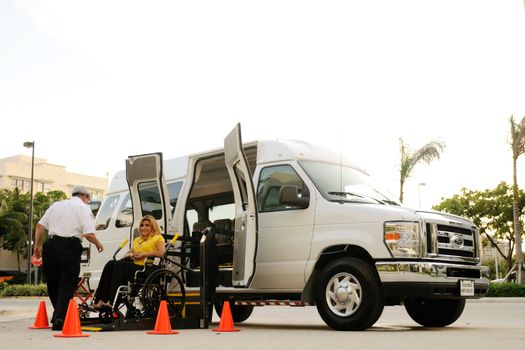
FTA audits show that wheelchair lift failures are the number one ADA compliance violation cited against transit agencies. That single pattern explains how auditors work. A lift failure is visible, it affects a specific passenger, and it usually leaves a trail: a complaint, a road call, a work order. If the surrounding maintenance records are thin, one failure can grow into a finding about the entire accessibility program.
Federal support for fleet accessibility has been available for a long time. From 1999 through 2012, the FTA made about $99 million available to help private motorcoach operators phase in and comply with fleet accessibility requirements. Public and private operators alike have had years of guidance to work from, which is part of why auditors expect documentation rather than intentions.
Training Documentation Inspectors Ask For
Driver training and maintenance training are both part of the compliance picture. Fleets should document training for drivers and maintenance teams as proof of compliance in case of inspections or audits. That means names, dates, and topic coverage an auditor can verify, not a signed sheet with nothing behind it.
Operational training does more than satisfy a file. Drivers who know how to deploy a lift, secure a wheelchair correctly, and respond when equipment fails prevent small problems from becoming passenger injuries. Maintenance staff who understand how accessibility components wear can catch issues during routine service instead of waiting for a road call from a route.
How Over-the-Road Buses and Shuttles Differ
DOT ADA regulations require accessible, timely over-the-road bus service for passengers with disabilities, including wheelchair users. Private operators and commercial shuttle fleets work under a different oversight structure than a municipal transit agency, but the equipment expectations overlap substantially. Commercial shuttle fleets must secure professional securement systems to comply with federal passenger safety rules.
The practical difference is where the records land. A transit agency answers to a federal review cycle, while a private operator may face contract audits, insurance reviews, and state inspections. In both cases, the paperwork that proves accessibility equipment works is the same paperwork that protects the operation when something goes wrong on the road.

Building a Pre-Audit Routine That Holds Up
Put Preventive Maintenance Ahead of Repair
Accessibility equipment belongs on a schedule, not a reaction list. Wheelchair lift preventive maintenance and securement inspections keep a fleet ahead of the failures that generate citations, and they cost far less than taking a bus out of service for an unplanned repair during a peak period.
Keep Records Findable
An auditor should be able to pull one vehicle’s file and read its history without hunting through three systems. Organize records by vehicle and date, and keep training documentation in the same place as maintenance records so a single review package answers every question. Transit bus ADA inspection software exists to keep both programs, mechanical and accessibility, provably compliant at the same time. A binder can do the same job when the discipline behind it is consistent.
Run Your Own Review Before Someone Else Does
A self-assessment built on the same categories auditors use, lifts, ramps, securement, paratransit documentation, and training, surfaces gaps while there is still time to close them. Schedule it far enough ahead of a triennial review that corrective work can actually be completed and documented.
How School Bus Fleets Approach the Same Questions
School buses carry some of the same accessibility equipment as transit vehicles: lifts, ramps, and securement systems for students who use wheelchairs or other mobility devices. The rules that apply to a district depend on how the transportation is funded and regulated, and they are not identical to the FTA requirements that govern a transit agency’s triennial review. Districts should confirm their own obligations with their state oversight agency.
What transfers across both settings is the discipline. Documented inspections, trained drivers and aides, and maintained equipment make a program defensible whether the review comes from a federal auditor, a state inspector, or a district’s own risk management office.

Where a Fleet Service Partner Fits
My Mobility Center has worked on mobility and accessibility equipment since 1990, and the current owners bought the company in 2024. Every technician is a company employee and mobile, which matters for fleets that cannot afford to send buses out of service for weeks at a time. The company is an authorized dealer for more than 40 manufacturers and serves organizations including school districts, transit fleets, hospitals, and senior living facilities across 32 states.
Fleet services include wheelchair lift preventive maintenance, securement service, bus air conditioning, Wheelchair Lift Operational Safety Training, and ADA compliance audits. For facilities rather than fleets, the company also runs free on-site equipment tune-up clinics. A showroom in Athens, Georgia anchors the operation, with more locations planned.
Frequently Asked Questions
What is an ADA compliance audit for bus fleets?
An ADA compliance audit is a structured review of a fleet’s accessibility equipment, records, and training against ADA requirements. For public transit agencies, FTA auditors review lift maintenance records, ramp inspections, securement device checks, and complementary paratransit documentation during triennial reviews. Private fleets often use the same categories as a self-assessment framework to prepare for contract requirements, insurance reviews, and state inspections.
What is the most common ADA violation found on transit buses?
Wheelchair lift failures are the most frequently cited ADA compliance violation against transit agencies. That is why maintenance records matter as much as working equipment. Auditors want to see that lifts were serviced on a schedule rather than repaired only after a breakdown. A lift that fails while carrying passengers can turn into a finding at the next review.
Do school buses need ADA compliance audits?
School transportation is governed by a mix of federal and state rules that differ from public transit requirements, so a district’s obligations are not identical to a transit agency’s triennial review. The practical overlap is equipment and documentation. Districts that operate lifts, ramps, and securement systems should verify their specific requirements with their state oversight agency and keep service records organized.
What documentation should a fleet keep for an ADA audit?
Keep lift maintenance records, ramp inspection logs, securement device check records, and complementary paratransit documentation where an auditor can find them. Driver and maintenance training records matter too, since documented training serves as proof of compliance during inspections or audits. Records should be organized by vehicle and date so a reviewer can trace the service history of any individual bus.
How often should accessibility equipment be inspected?
Auditors are looking for a documented schedule rather than a single interval that fits every fleet. What matters is that the interval is defined, followed, and recorded, and that repairs are logged alongside scheduled service. Fleets with high-mileage routes, heavy wheelchair use, or harsh operating conditions should work with a service provider to set intervals that match actual wear.