The parts of a building that decide whether someone can get in and move around once they are inside.
Free Consultation | Estimate
Start With A Conversation
A mobility specialist will contact you shortly. All consultations, estimates, and scopes of work are provided completely free of charge. No pressure or obligation.
4.6 from 101 Google reviews1990 serving families since40+ authorized manufacturer brands32 states served
Ramp Assessment
Answer a few questions about the entrance and see the modular ramp it needs, with its price, installation included.
Door Opener Assessment
Answer a few questions about the door and see the opener we would recommend, with its price and installation as its own line.
Types Of Home & Commercial Access We Install
Point at one.
How We Work Out What Your Entrance Needs
Four questions. The first one settles most of it, and it is pure arithmetic.
1
How high is the rise?
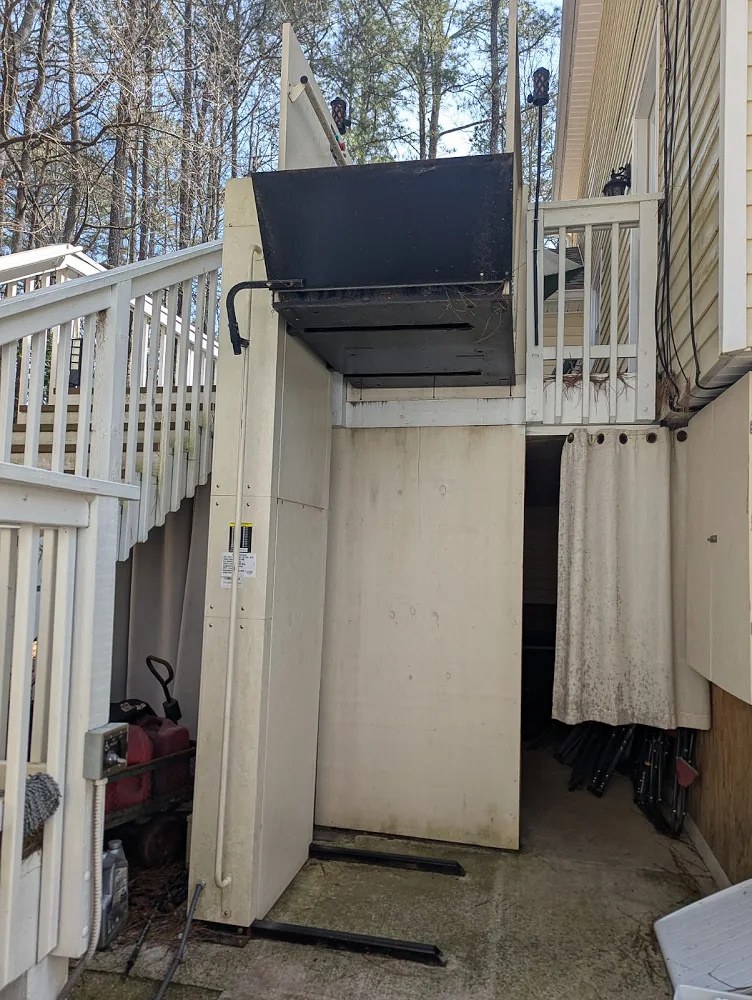
A compliant ramp needs about twelve inches of run for every inch of rise, plus landings. Two steps is manageable. A four-foot porch wants close to fifty feet of ramp, which is when a platform lift becomes the sensible answer rather than the expensive one.
Low rise: a ramp fitsHigher rise: a lift takes less room
2
How long do you need it?
Modular aluminum goes in without pouring concrete and comes back out. Poured concrete is permanent and looks it. Coming home from hospital next week is a different purchase from planning to stay for twenty years.
Temporary: modular, removable, rentablePermanent: built to stay
3
Can the door be managed?
Getting to a door is not the same as getting through it. A closer that needs real force, a threshold that catches a caster, or a handle that cannot be gripped will stop somebody who has just come up a perfectly good ramp.
Door manageable: threshold work onlyToo heavy: powered operator
4
What happens inside?
The bathroom is where most falls at home happen, and it is usually the next call after the entrance. Grab bars need blocking behind the wall, which is worth finding out about while somebody is already on site.
Entrance only for nowBathroom too: bars, seating, rails
What Moves The Price
Access work covers a wide range, from a two hundred dollar grab bar to a full entrance rebuild. These are the factors.
Rise and total run
Ramps are priced by length, and length is set by the rise. This is the single biggest factor.
Modular or permanent
Aluminum goes in fast and comes back out. Concrete or timber is construction.
Powered door operators
The operator, the power run, and the actuators. More in a commercial setting where code applies.
Landings and turns
Every direction change needs a level landing. A switchback costs more than a straight run of the same length.
Wall condition
Grab bars need something solid behind them. Tile, plaster, and missing blocking all add work.
Commercial code
ADA requirements, permits, and inspection where the building is open to the public.
The bars show relative impact, not dollars. For a real number, the survey is free.
Getting In The Door, Four Ways
The right answer depends almost entirely on the rise and how long you need it.
A modular ramp
CostHundreds to thousands
TimeOften one visit
Fast, removable, rentable, and no concrete. The best answer for most low rises and for anything temporary.
A poured ramp
CostMore
TimeWeeks
Permanent and can be made to look like part of the house. It is construction, with the schedule that implies.
A platform lift
CostThousands
TimeWeeks
Takes far less room than a compliant ramp once the rise passes about two feet.
Threshold work alone
CostHundreds
TimeOne visit
Where the only obstacle is a lip or a heavy door. Ask before assuming you need something larger.
What Makes A Ramp Safe
Six things, and the two that fail most often are the two people never look at.
01
The slope
Measured rather than eyeballed. A ramp that is too steep is not a ramp, it is a hazard with a handrail.
02
The landings
Level rest points at the top, the bottom, and at every turn. This is what most homemade ramps get wrong.
03
The surface
Slip resistant in rain and ice. A wet timber ramp in January is more dangerous than the step it replaced.
04
Edge protection
A raised edge that stops a caster running off the side. Easy to leave out, and the reason for a lot of falls.
05
Handrails
Both sides, at the right height, continuous through the turns and graspable by somebody with limited hand strength.
06
The threshold
Where the ramp meets the door. A perfect ramp to a two-inch lip has not solved anything.
What Actually Stops People
Three things we hear about entrances and bathrooms.
Recent home & commercial access installations.
Photographed on the day, in real homes and buildings.
Brands We Are Authorized To Sell And Service
Carrying several lines means the equipment gets matched to the situation rather than the situation getting matched to the equipment.
EZ-Access
Access4U
Open Sesame
How The Work Happens
Consultation
A conversation about the person, the building or the fleet, and the budget. Free, and with no obligation to buy anything.
Site survey
A technician surveys the site in person and gives you a written scope, so the price you agree to is the price of the job.
Installation
Factory-certified technicians install and commission the equipment, and stay until everyone who has to operate it can.
Service
Maintenance and repair for as long as you own the equipment, from the people who put it in. Scheduled preventive maintenance where a contract calls for it.
The Credentials Behind The Work
Anybody can sell equipment. Installing it legally, configuring it clinically, and servicing it afterward takes credentials that have to be earned and kept current. Here is what our team holds.
Elevator Mechanic
State Elevator Mechanic Licenses
Licensed elevator mechanics, state by state. Residential elevators and platform lifts are regulated work in most jurisdictions, and this is the license that makes it legal to do.
ATP
ATP, Assistive Technology Professional
RESNA-recognized credential for evaluating a person's needs and specifying the assistive technology that fits. This is who you want configuring a power chair or a seating system.
CRTS
CRTS, Complex Rehab Technology Supplier
The credential for supplying individually configured complex rehab. It is what separates a supplier who works alongside your clinical team from one who ships a box.
CAPS
CAPS, Certified Aging-in-Place Specialist
Training in modifying a home so someone can stay in it. It is the difference between installing equipment and understanding the house it goes into.
MSE
Mobility Service Excellence
Industry service certification covering installation, maintenance, and repair standards across mobility equipment.
EPA 609
EPA Section 609
Federal certification for handling refrigerant in vehicle air conditioning. It is required to legally service a bus AC system, and it is why fleet work is something we can actually take on.
Recent Installations
Real work in real homes and buildings, photographed on the day.
What Our Customers Say
What People Say After We Leave
Pulled directly from our verified Google reviews. We respond to every single one.
Mason is a wonderful service technician! We live in “rural country” of NE Georgia and he drove all this way to get my Dad’s chair lift up and running. Thank you, Mason AND Custom Mobility!
Susan Scarboro3 months ago
★★★★★
As a fellow business owner, I have seen this company do all of their work with as much professionalism and tact as any that I have ever encountered. I thoroughly enjoy actually witnessing people who care about their work and show it through their actions, and the owner at Customer Mobility is the ep…
Zach Purcell5 months ago
★★★★★
My Service Technician is truly the best! He responded within a day and he fixed the chairlift in less than an hour! It’s reassuring to know that we can depend upon Custom Mobility!
A modular ramp is typically installed in a day. Permanent construction takes longer and may need a permit.
Will a ramp fit my entrance?
ADA guidance is twelve inches of run per inch of rise. Where there is not room, a platform lift usually is the answer.
What slope does a ramp actually need?
Roughly twelve inches of run for every inch of rise, plus level landings at the top, the bottom, and every turn. A four-foot rise wants close to fifty feet of ramp, which is when a platform lift takes less room.
Modular or poured concrete?
Modular aluminum installs fast and comes back out. Poured concrete is permanent and can be finished to match the house. The right answer depends mostly on how long you need it.
Do you fit automatic door openers?
Yes, residential and commercial. Where a door is too heavy to manage with a walker, a cane, or full hands, a powered operator often solves more than a ramp does.
Can you install grab bars in a tiled bathroom?
Yes. The bar is the easy part; finding something solid behind the tile is the work. A bar fixed into plaster holds until the moment somebody needs it.
Is a permit needed?
Sometimes, particularly for permanent ramps and for commercial work. We handle it, and we will tell you at the quote if one applies.
Talk To Us About Home & Commercial Access
A free survey, a written scope, and a number that does not move afterward.