People ask this and get reassured rather than answered. Here is the straight version.
The honest position
Do not buy this equipment as an investment. It is bought to let somebody use their home, and any effect on value is a secondary consideration rather than a reason.
That said, the fear that it wrecks a house is overstated, and the distinction that matters is what removes cleanly and what does not.
What removes cleanly
A stairlift. The rail fixes to the stair treads rather than the walls. Removal leaves small fillable holes in the treads and nothing on the walls; on carpet the carpet is refitted and there is nothing to see. Our removal guide covers it.
Grab bars and handrails. Fixings fill and the wall is made good.
A modular ramp. Comes apart entirely and goes elsewhere.
Threshold ramps, seating, portable equipment. Leaves with you.
Practically, a house can be returned to its previous state for a modest cost. That is worth knowing when somebody objects to a permanent change that is not permanent.
What is genuinely permanent
A home elevator. A shaft through two floors and a pit. Reversing it means rebuilding.
A poured concrete ramp, and the pad for a platform lift.
A bathroom conversion. A level-entry shower is a rebuilt room.
Widened doorways and structural changes.
These are decisions to make on their merits rather than on resale.
The part that usually adds value
Several things done for accessibility are simply good building work that any buyer values.
A level entrance rather than steps. A downstairs bathroom or shower room. Better lighting throughout. Wider doorways. A level-entry shower, which reads as contemporary rather than clinical when it is well finished.
Those are universal design decisions, and our design guide covers why they age better than adaptations that look like adaptations.
The part that can put buyers off
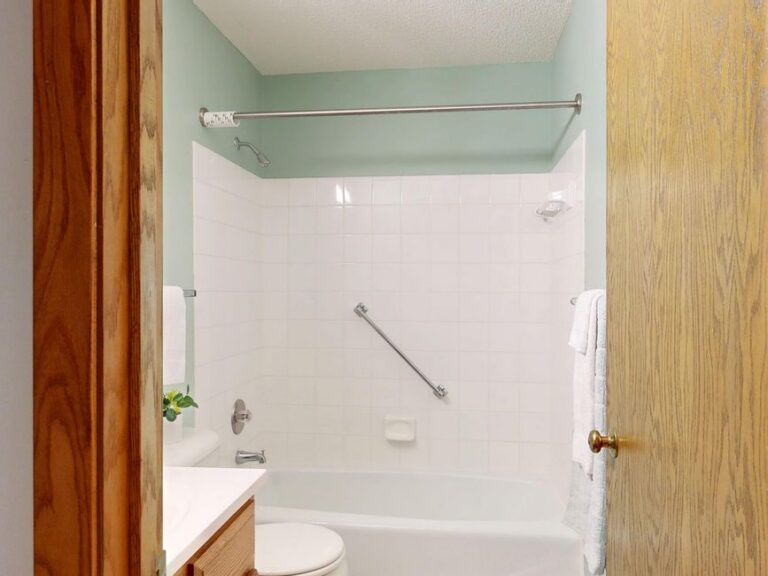
Work that looks institutional rather than domestic. Clinical white grab bars against tile, a bathroom that reads as a facility, or a ramp built to no particular standard across the front of a house.
The equipment is not the problem; the finish is. Contrasting bars in a finish that suits the room cost the same as white ones and read entirely differently.
A market nobody talks about
Accessible housing is scarce, and there is a real population of buyers actively looking for a house somebody with limited mobility can live in.
A house with a level entrance and a downstairs bathroom is genuinely more sellable to those buyers. That is not a reason to spend, and it is a reasonable answer to somebody who assumes the opposite.
If you are selling with equipment in place
Ask the agent whether to leave a stairlift or remove it. The answer usually depends on the likely buyer for that house.
Have the service records available either way. A maintained lift with paperwork is an asset; an unmaintained one of unknown age is a question mark.
The question worth asking instead
Not what this does to the value of the house, but what it costs to not do it.
Somebody who cannot use half their home, or who moves earlier than they needed to, or who falls on a staircase, has paid a price that does not appear in any valuation. The CDC reports falls as the leading cause of injury death for adults 65 and over.
Set against that, a few fillable holes in the treads is not the consideration people think it is.
Doing it well
Choose finishes that suit the house. Get work done properly rather than cheaply. Keep the paperwork. Do the universal things when something is being replaced anyway.
Our order of work puts the sequence together, and smaller equipment ships free from our online shop.
Finishes decide how it reads
The practical difference between work that reads as thoughtful and work that reads as institutional is almost entirely finish.
A grab bar in brushed nickel that matches the taps reads as a fitting. The same bar in clinical white against tile reads as a hospital. They cost within a few dollars of each other.
The same applies to ramps, handrails and shower screens. Ask a supplier what finish options exist rather than accepting the default, and our grab bar guide covers positioning them well.
Permits and paperwork
Where work required a permit, keep the paperwork and the sign-off. Unpermitted structural work is a genuine problem at sale, and a permitted ramp or elevator with an inspection history is not.
For anything with an ongoing inspection requirement, keep the certificates. Our inspection guide covers where those apply.
Ask an agent, not a supplier
We install this equipment, so we are not the neutral party on what it does to a sale price in your market. A local agent is, and it is a free conversation.
Ask them specifically about the buyer profile for your street rather than in general.
What we would do in your position
Make the decision on whether somebody can use their home, not on resale. Then, having decided, choose finishes and standards that suit the house rather than the cheapest version.
That approach produces work you do not have to apologize for and equipment that comes out cleanly if it is ever no longer needed. Our removal guide covers what the stairs look like afterward.
The thing worth weighing it against
The CDC reports falls as the leading cause of injury death for adults 65 and over, and a fracture frequently ends independent living entirely.
Against that, the question of what a stairlift does to an asking price is not the consideration people treat it as. Smaller equipment ships free from our online shop.
Timing a sale
If a house is being sold within a year or two, that is a reason to favor removable equipment over permanent construction, not a reason to do nothing.
Equipment that is portable rather than fixed leaves with you, which is part of why Medicare treats durable medical equipment differently from home modification.