A chair that is too wide is as harmful as one that is too narrow, and both are common because seat width is frequently chosen by eye.
These measurements belong to a clinical fitting for anybody who will spend real time in a chair. Knowing what they are lets you tell whether one happened.
The six
1. Seat width
Measured across the widest point of the hips and thighs, seated, with whatever clothing is normally worn.
Too narrow presses on the hips and creates pressure points at exactly the places that matter.
Too wide is the one people get wrong deliberately, thinking wider is more comfortable. It is not: it lets somebody lean to one side, which produces asymmetric posture over months, and it puts the armrests out of reach so they cannot push up to transfer. It also makes the chair harder to get through doorways.
2. Seat depth
From the back of the buttocks to the back of the knee, seated.
Too shallow loads a small area and loses thigh support.
Too deep presses behind the knee, restricts circulation, and causes somebody to slide forward to relieve it, which is how sacral sitting and shear damage begin.
The usual target leaves a small gap behind the knee, typically a couple of fingers.
3. Seat to floor height
Decides whether feet rest properly and whether the chair fits under a table.
Too high and feet dangle, putting load on the thighs. Too low and knees rise above hips, tipping the pelvis back and loading the tailbone.
The cushion changes this, which is why cushion and chair are specified together.
4. Back height
How much trunk support somebody needs. An active user who self-propels wants a lower back for shoulder freedom. Somebody with limited trunk control needs more, sometimes up to the shoulders or head.
Too high on a self-propelling user restricts pushing and causes shoulder problems over years.
5. Armrest height
Elbow at roughly ninety degrees with shoulders relaxed.
Too high lifts the shoulders and causes neck and upper back pain. Too low means leaning to reach, which pulls posture to one side.
6. Footrest length
From the back of the knee to the heel, so thighs are supported and feet are flat.
Too short lifts the knees and loads the tailbone. Too long lets the thighs unload onto the seat edge.
Take the measurements seated, not standing
The commonest error. Body dimensions change between standing and sitting, particularly across the hips, and a chair specified from standing measurements is a chair specified wrong.
Measure on a firm surface, in usual clothing, with the person in the posture they actually adopt rather than one they have been asked to hold.
Weight capacity
A separate figure, and ask for an actual weight rather than an estimate. A chair used above its rating wears faster, and the frame, the drive and the seating are all specified to that number.
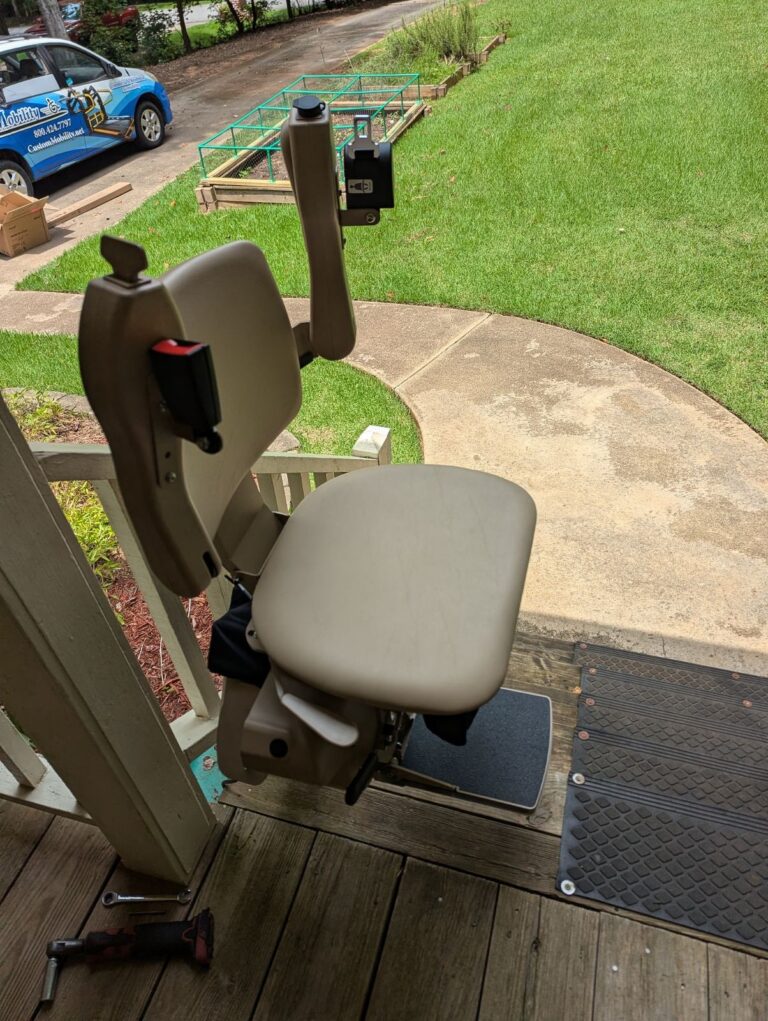
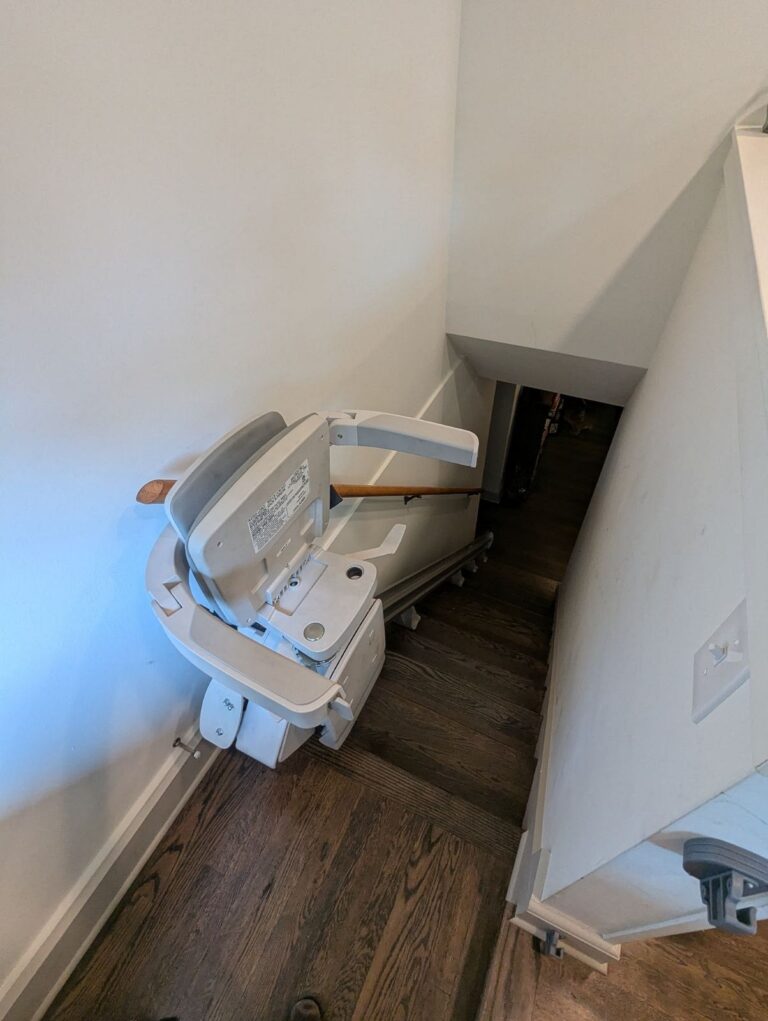
Our heavy-duty guide makes the same argument for stairlifts and the reasoning is identical.
What changes over time
Weight changes, posture changes, muscle tone changes, and a chair fitted two years ago may no longer fit.
Reassess after any significant change in weight, after a hospital stay, after a change in condition, and routinely every couple of years. A chair that no longer fits is doing quiet damage rather than obvious damage.
What a bad fit looks like from across the room
- Leaning consistently to one side.
- Sliding forward, with the tailbone taking the load.
- Shoulders lifted, or a head held forward.
- Feet not flat, or knees higher than hips.
- Hands not reaching the armrests comfortably.
- New complaints of pain in the neck, shoulders or lower back.
Any of those means a reassessment rather than a cushion.
Who does this properly
An ATP with an occupational therapist for anything clinical, and our assessment guide covers the credentials. Our cushion guide covers the component that sits on top of all of it.
Standard equipment sized by measurement rather than by clinical fitting ships free from our online shop.
Measuring at home before an appointment
Not a substitute for a clinical fitting and it makes the appointment considerably more useful.
Sit the person on a firm dining chair, feet flat, in ordinary clothing. Measure hip width at the widest point. Measure from the back of the buttocks to the back of the knee. Measure from the back of the knee to the floor. Note their weight.
Four numbers, ten minutes. Take them to the appointment with a note of what is currently uncomfortable.
Transport chairs and attendant-pushed chairs
Sized the same way, with one addition: the person pushing also has to be considered. Handle height, whether the chair tracks straight, and how it folds all decide whether it gets used.
Have the person who will push it push it, on a slope, before buying. Our aids guide covers where a transport chair fits in the ladder.
Doorways and the width you chose
Overall chair width is wider than seat width, usually by several inches once wheels and handrims are included.
Measure your narrowest doorway clear opening, from the face of the open door rather than the frame, and compare it against overall width rather than seat width. The Access Board sets accessible route dimensions, and a house frequently gives less. Our measurement guide covers it.
Reassessment after a hospital stay
Worth its own line. Weight loss, muscle loss and changes in tone are all common after an admission, and a chair that fitted before may not fit after.
If somebody has come home from hospital and their chair now feels wrong, that is a reassessment rather than a complaint.
Growth and children
A chair for a child is specified with growth in mind, which means adjustable frames rather than a chair that will be outgrown in eighteen months.
Reassessment should be scheduled rather than prompted by discomfort, because children adapt to a poor fit and do not complain until it has already caused a problem.
Where the numbers meet the house
A perfectly fitted chair that cannot enter the bathroom is not a solution. Take the chair’s overall width and turning radius to the house before finalizing, and compare against the Access Board route dimensions and your own measurements.
Basic equipment ships free from our online shop.
What to do between reassessments
Watch posture rather than waiting for complaints. Photograph the person seated, from the front and the side, every few months. Compared side by side, a developing lean or a slide forward is obvious in photographs and invisible day to day.
That is a two-minute habit and it catches fit problems months before anybody would otherwise raise them.
Secondhand chairs
A used chair is sized for whoever had it before. Frames adjust to a point and not infinitely, and a chair that cannot be adjusted to the person is the wrong chair however good the price.
Take the six measurements first, then see whether a specific chair can reach them. Our used equipment guide covers the wider question.
Where seating is specified clinically, it can fall within Medicare’s durable medical equipment category on documented need, and a correct fit is what that documentation is assessed against.