A vertical platform lift is the machine people reach for after they have measured their front yard and discovered a compliant ramp will not fit.
What it is
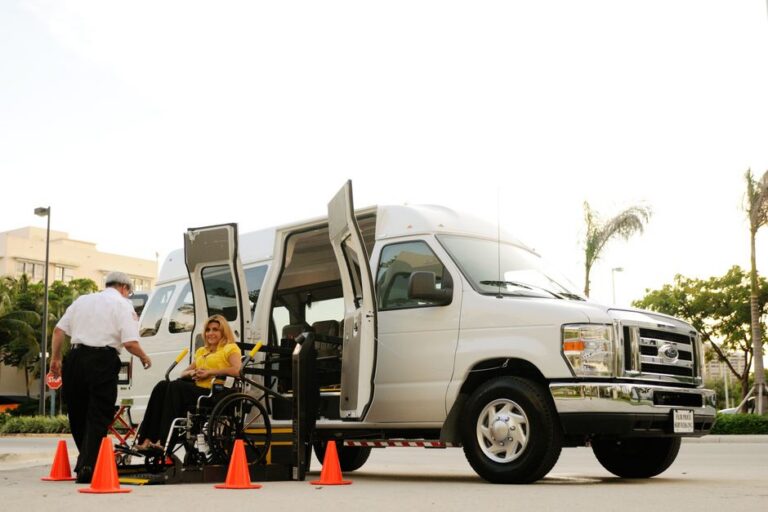
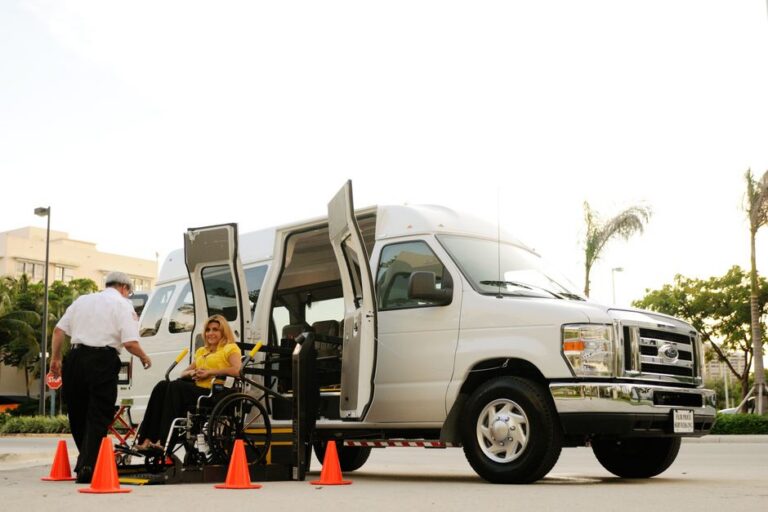
A flat platform, large enough for a wheelchair or scooter and its occupant, that travels vertically between two levels on a tower. The user drives on, presses and holds a control, and rides up. There is no transfer out of the chair at any point, which is the essential difference from a stairlift.
Both the Bruno VPL-3100 and the Harmar Highlander II carry 750 lb, which covers a power chair with its occupant and room to spare.
The arithmetic that decides between lift and ramp
The ADA Accessibility Guidelines set a maximum running slope of 1:12 for ramps. Twelve inches of run for every inch of rise, plus level landings top, bottom and at every turn, and a landing required before the rise exceeds 30 inches.
So a porch four feet above the ground is 48 inches of rise, which wants 48 feet of ramp before you add landings. Realistically closer to 60 feet of usable length, usually switchbacked.
A platform lift needs a level pad. That is the whole comparison, and past about two feet of rise it usually decides itself.
What it needs to be installed
- A level, load-bearing pad. If one does not exist it has to be poured and cured, and that is what turns a days-long job into a weeks-long one.
- Power. An appropriate supply, occasionally run specially. Checked at survey.
- Clearance at the top landing. Where the platform arrives and how the gate opens.
The safety systems, which are the point
Landing gates with mechanical interlocks, so the gate cannot open mid-travel and the lift cannot move with a gate open. A sensitive pan beneath the platform that stops the lift if it meets an obstruction. Constant-pressure controls, so it only moves while the button is held. An emergency stop. Battery backup with controlled lowering.
None of that is optional or upgradeable. It is what separates a platform lift from a machine that lifts things.
Indoor and outdoor
Both exist. Outdoor units are weather-rated throughout rather than indoor units with covers, which is the same distinction we draw on outdoor stairlifts. In the Southeast, heat and humidity matter more than cold.
Where they get used
Porches and raised entrances first, then decks, garage-to-house steps, split-level entries, and occasionally inside a house between two floors where an elevator would be too much building work.
In commercial settings they appear where an accessible route has to span a level change and a ramp cannot fit, and the Access Board guide to elevators and platform lifts covers when a lift may be used in place of a ramp under the ADA Standards.
Licensing, which varies more than anything else
This is where states diverge sharply. Georgia regulates platform lifts along with elevators and stairlifts, through the Office of Insurance and Safety Fire Commissioner. Wisconsin does not require a state elevator license for a platform lift at all. Several north-eastern states regulate platform lifts while leaving stairlifts alone.
It genuinely changes what is involved and who is allowed to do it. Our state pages sets out the position in each state we serve, which is not something you will find on a competitor’s site.
What it does not do
It does not travel along a staircase. If the problem is an internal flight and the person can transfer onto a seat, a stairlift is cheaper, faster and less disruptive.
And if the real obstacle is a single step or a raised threshold, you do not need any of this. A threshold ramp solves it for very little and ships free from our online shop.
How high can it go
Residential units commonly serve rises from a couple of feet to around fourteen, depending on model and configuration. Beyond a certain height the tower changes, the power system changes, and the job starts to resemble a small elevator in what it requires of the building.
Which means the rise is the first measurement to take. Ground to the finished level of the porch or deck, not to the top step.
Enclosed or open
An open platform is the common residential arrangement. An enclosed tower or a full hoistway is used where the rise is greater, where weather exposure is severe, or where a commercial setting requires it. Enclosure adds cost and it is not decorative.
What it is like to use
Slow, deliberately. Constant-pressure controls mean the platform only moves while the button is held, which feels odd for the first week and is the safety principle the whole machine is built on. The access ramp at the lower landing folds up automatically once travel begins, forming a barrier.
Maintenance
Annual service at minimum, and more in a commercial setting. Gates and interlocks get checked, the obstruction pan is tested rather than looked at, and the batteries are load-tested. Our service page covers what that involves, including on equipment we did not install.